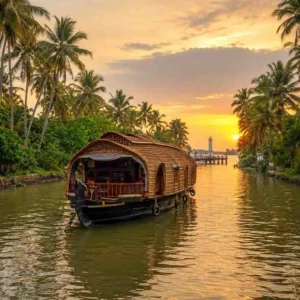

The backwaters look different once the sun goes down. An overnight houseboat Kerala stay starts as a daytime cruise and turns into something quieter and slower once the engine cuts out and the boat ties up for the night. Most day-trip visitors never see this part. They watch the paddy fields and coconut lines from the deck for a few hours, then head back to a hotel before dusk. Staying aboard changes the whole shape of the trip.
This is written for anyone planning a backwater trip through Alleppey, whether that’s a couple looking for a quiet night away, a family wanting a slower pace, or a small group booking a private cruise. Below are ten things that only show up once the boat stops moving and the light fades.
So What Does Overnight Houseboat Kerala Actually Add?
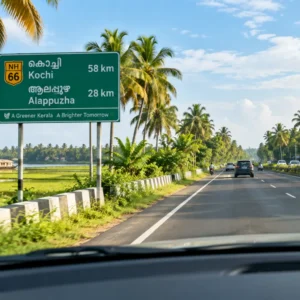
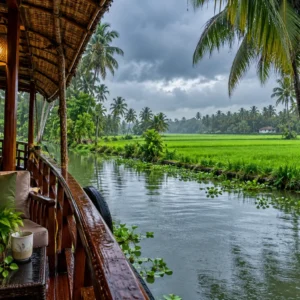
A day cruise usually runs three to four hours, enough time to see the paddy fields, a stretch of canal, and maybe a coir-making stop along the way. Then the boat turns back towards the jetty before the light changes. An overnight stay keeps the same route but stretches it past that turning point, through dinner, past dark, and into the next morning.
That extra stretch of time is really where the difference sits. It’s not a longer version of the same daytime view; it’s a different set of hours entirely, ones that a same-day booking simply doesn’t include. The ten points below cover what those hours tend to look like in practice.
1. The Silence After the Engine Stops
Kerala boat house crews usually anchor for the night in a quieter stretch of canal, away from the main tourist channels near Alappuzha town. The moment the engine cuts, the sound changes completely. Water laps against the hull. Frogs and crickets take over. It’s a small shift, but it’s the first sign the day-trip crowd never gets to notice.
2. Dinner Cooked While You Watch
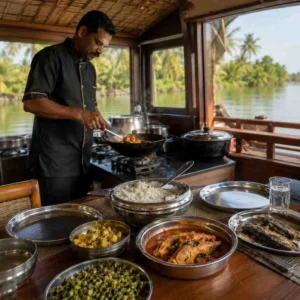
Onboard chefs typically prepare the evening meal in a small galley at the rear of the boat, and the smell of it drifts through before the food arrives. Traditional Kerala dishes, usually rice, fish curry, and vegetable sides, get plated fresh rather than kept warm for hours. Eating on the open deck as the light fades adds a rhythm to the evening that a restaurant meal on land doesn’t quite match.
3. Village Life Along the Bank
Once the boat is anchored for the night, homes along the canal edge start lighting up. A single bulb over a doorway, a television flickering through a window, someone walking home with a bicycle lamp. It’s a small, ordinary view into daily Kuttanad life that the daytime cruise route rarely slows down long enough to show.
4. Stars Without the Glare
Away from Alleppey’s main road lighting, the night sky over the backwaters gets noticeably darker. On a clear night, the number of visible stars increases sharply compared to what’s visible from town. Guests staying overnight on a Kerala boat house often mention this as one of the more memorable parts of the trip, simply because they didn’t expect it.
5. The Private Deck After Dark
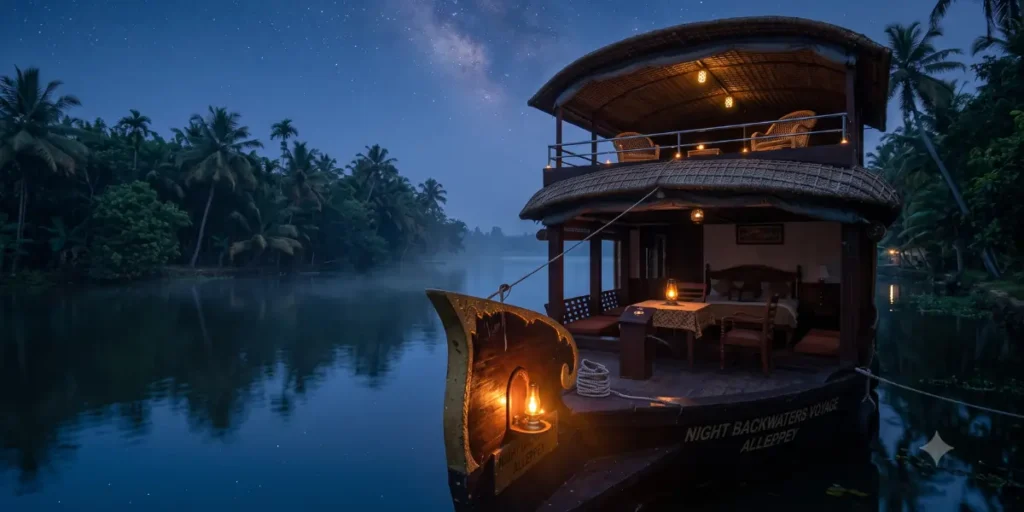
Most houseboats built for overnight stays include a private balcony or open upper deck attached to the bedroom. At night, this becomes a different space entirely: a place to sit with a cup of tea, watch the water, and let the day settle. During daylight hours the same deck is mostly used for photographs and views. After dark, it’s used for stillness.
6. Sleeping to the Sound of Water
Air-conditioned bedrooms on premium and deluxe houseboats are designed to shut out mosquitoes and insects, but the low sound of water against the hull still comes through faintly. It’s a different kind of sleep from a hotel room, closer to camping but with a proper mattress and attached bathroom underneath it.
7. Staff Stories and Local Knowledge
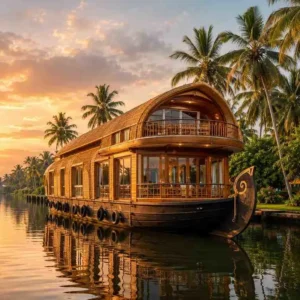
Overnight staff, usually a cook and a boatman, tend to be far more talkative once dinner service winds down. They’ll point out which canal leads where, mention which villages grow rice below sea level, and answer questions about life aboard a traditional kettuvallam that daytime guides rarely have time for. It’s one of the more understated benefits of staying the night instead of doing a half-day cruise.
8. Early Morning Mist Before Sunrise
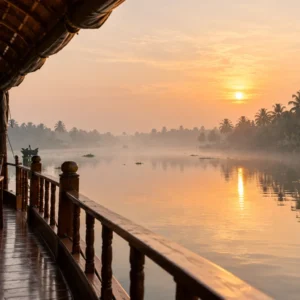
The hour before sunrise on Vembanad’s connected canals often brings a thin layer of mist sitting just above the water. Fishing boats move through it quietly, well before most tourist traffic starts. Guests who stay overnight are usually the only ones on the water to see it, since the first day-cruise boats don’t leave the jetty until mid-morning.
9. Bird Activity at First Light
Kerala’s backwater system, including the Vembanad wetland that Alappuzha’s canals connect to, is recognised as one of India’s largest Ramsar-listed wetlands and supports a large resident and migratory bird population. Early morning, before the heat sets in, is when this activity is easiest to spot from the boat itself, without needing to book a separate birdwatching tour.
10. Sunrise From the Same Spot You Watched Sunset
Because the boat stays anchored overnight rather than returning to the jetty, guests end up watching sunrise from roughly the same stretch of water where they watched sunset the evening before. It’s a small detail, but it’s the clearest marker of what an overnight houseboat Kerala stay actually adds compared to a same-day cruise: two ends of the same view, several quiet hours apart.
Final Thoughts
None of this requires anything unusual, just enough time on the water for the daytime crowd to clear out and the canal to settle into its slower, quieter rhythm. If you’re deciding between a day cruise and staying aboard, the night hours are really where the difference shows up. Which of these ten would you want to build your evening around?
FAQ
Reputable operators anchor overnight in sheltered canal stretches away from open water and main shipping channels, with crew staying aboard through the night. Ask your operator directly about their anchoring location and onboard staff arrangements before booking, especially during monsoon months.
Room, meals, and crew service form the base of nearly every package. Where it gets confusing is the gap between tiers. A deluxe boat might give you one AC bedroom and a shared open deck, while a luxury booking adds a private balcony and a wider food menu with more non-vegetarian options. Bottled water and one round of evening tea or coffee are usually included too, but soft drinks, alcohol, and anything beyond the standard three meals typically cost extra. Get the exact meal count and add-on pricing in writing before you pay a deposit.
Yes, on premium and deluxe boats. Attached bathrooms and air-conditioned bedrooms are standard on most modern Kerala boat house builds, though older or budget boats may run AC only during set hours. It’s worth asking specifically if you’re booking during the hotter months between March and May.
Generally yes, since bedrooms are enclosed and decks usually have railings, but there’s no substitute for supervision near open water at any hour. Mention children’s ages when booking so the crew can flag any specific safety points for that particular boat.
Most operators anchor between 5 and 6 in the evening, well before dark, and going ashore afterwards isn’t standard practice once the boat is settled for the night. If you want a village walk or a specific stop, raise it with the operator while planning the route, not after boarding.