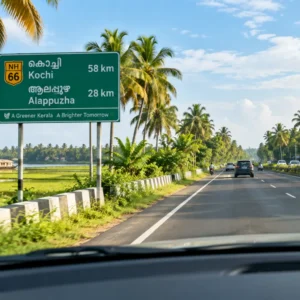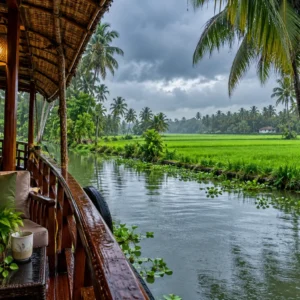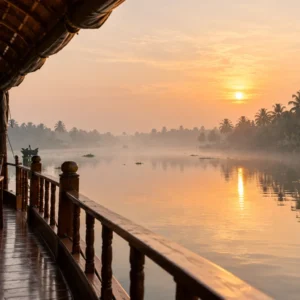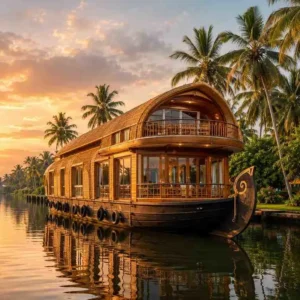

Most visitors land in Alleppey with one plan: a houseboat and nothing else. That approach misses half the story, because Alleppey attractions stretch well past the water routes into a beach town with a working pier, a palace with a hand-painted mural older than most tourist maps, and a temple street that still runs on morning bells and flower vendors. If you have a day or two free between cruises, these spots fill that time without feeling like filler.
Alleppey Attractions: What Makes Alleppey Town and Its Colonial Bones Best?
Alleppey attractions to visit start right in the town center, not on the water. Alleppey was built as a planned port town in the late 1700s under Dewan Raja Kesavadas, and the old canal network still cuts through it, lined with warehouses that once handled coir and spices bound for Europe. Walking the VCSB Road area in the early morning, before the heat sets in, gives a sense of that trading history that a boat ride can’t offer. Coir factories, some still operating, sit a short auto ride from the main jetty, and a few allow short visits to watch the fiber get spun by hand.
Krishnapuram Palace is the standout stop here, about 47 kilometers south in Kayamkulam but often grouped into an Alleppey day trip alongside a houseboat stay in Alleppey. The palace houses the Gajendra Moksham mural, one of the largest single murals in Kerala, depicting an elephant’s release from a crocodile’s grip according to Hindu scripture. The structure itself mixes Kerala and Dutch colonial architectural styles, which is unusual enough to make the detour worthwhile even for travelers who typically skip museum stops. A small museum on the palace grounds holds antique furniture, bronze idols, and a collection of old coins recovered from the surrounding region, none of it heavily promoted but worth twenty minutes if the main hall isn’t crowded.
Back in town, the Revi Karunakaran Museum adds a different angle entirely, housing Belgian glass, Chinese porcelain, and colonial-era furniture collected over decades by a single trading family. It rarely appears on standard tour itineraries, which usually means shorter queues and a guide willing to talk at length about individual pieces rather than rushing a group through.
Temples and Everyday Ritual Life
Top attractions in Alleppey often skip past Mullakkal Rajeswari Temple, dedicated to goddess Bhagavathi, sitting a few minutes’ walk from the boat jetty. The temple hosts a nine-day festival called Mullakkal Chirappu, drawing crowds from across the district for classical dance and music performances. Non-Hindu visitors are generally welcome in the outer courtyard, though the inner sanctum follows standard temple dress and entry protocols, so checking with temple staff before entering is worth the extra minute.
A short distance away, St. Andrew’s Basilica in Arthunkal reflects the region’s older Portuguese trading connections, with an annual feast in January that turns the surrounding streets into a market for several days. These sites work well paired together since they sit within a twenty-minute drive of each other, and neither charges an entry fee, which keeps a temple and church circuit affordable for families managing a tight travel budget.
Beaches, Lighthouses, and the Coastal Edge
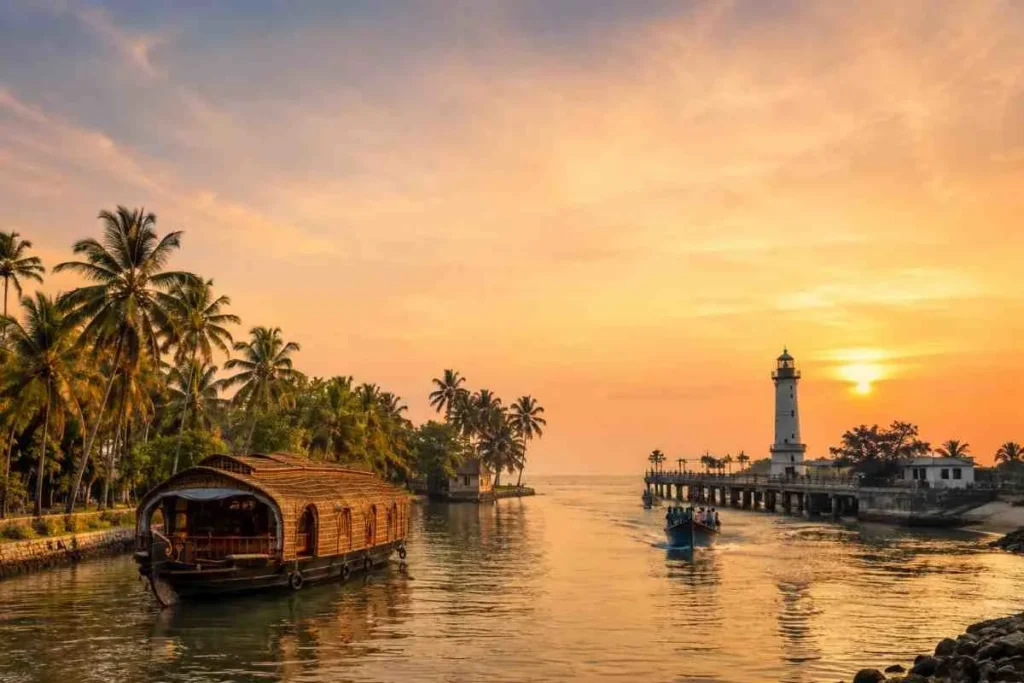
Alleppey Beach itself gets overlooked by houseboat-focused itineraries, but the pier extending into the Arabian Sea is one of the oldest of its kind on the Kerala coast, built originally for cargo ships in the 19th century. Sunset here draws a mix of locals playing cricket on the sand and visitors watching fishing boats return for the evening catch. A short walk north brings you to the Alleppey Lighthouse, still functional and open to visitors during set hours, offering a coastal view that most backwater cruises never reach since houseboats generally stay within the inland canal system.
For travelers wanting a quieter beach, Marari Beach lies about 12 kilometers north and has stayed relatively undeveloped compared to Kovalam or Varkala further south, making it a reasonable half-day addition if time allows.
Punnamada Lake and the Boat Race Legacy
Punnamada Lake hosts the Nehru Trophy Boat Race each August, where snake boats crewed by over a hundred rowers race in front of crowds that can exceed 100,000 spectators. Outside the race season, the lake itself is calmer and forms part of the wider backwater network, but the race grounds and the nearby boat sheds, where the snake boats are stored and maintained between events, give context to a tradition that predates organized tourism in the region entirely.
Final Thoughts
Alleppey rewards visitors who budget time beyond the water. A palace mural, a working lighthouse, a temple festival calendar, and a beach that still functions as a fishing harbor all sit within reach of a standard houseboat. Most of these stops work best fitted around the cruise rather than instead of it, so it helps to mention the palace or temple detour when confirming pickup and drop-off timings ahead of the trip, since crews can often adjust the boarding window by an hour or two to make room for it. Which of these fits into your next Alleppey trip, the palace circuit, the temple walk, or the coastline?
FAQ
Yes, and most travelers only realize this after their trip. The town center has coir warehouses, a colonial-era pier, and walkable temple streets that a houseboat itinerary won’t cover, since cruises typically stay in the canal network away from the town core.
It sits about 47 kilometers south, closer to Kayamkulam than central Alleppey. Plan for roughly an hour each way by road, so it works best as a half-day trip rather than a quick stop between other errands.
The outer courtyard welcomes visitors of all backgrounds, though the inner sanctum follows standard dress and entry rules common to Kerala temples. Checking with staff at the entrance before proceeding avoids any confusion during festival periods when the temple gets busy.
The race runs every August on Punnamada Lake, typically on the second Saturday of the month, though dates shift slightly year to year. Outside that window, the race grounds and boat sheds are still open for visitors interested in the tradition itself.
Alleppey Beach and Marari Beach are better suited to walking and watching the fishing activity than swimming, since currents along this stretch of coast can be unpredictable. Local guidance on conditions is worth asking for before entering the water at either location.