

You’re headed to God’s own country. You’ve enjoyed the emerald backwater cruises and the misty tea gardens on your feed. But here’s the thing: Kerala isn’t just a postcard. It’s a place with deep-rooted traditions and a specific rhythm of life. If you want to move beyond being just a tourist and actually connect with the land, you need a few Kerala travel tips that go beyond “pack sunscreen.”
The difference between an awkward trip and an unforgettable one usually comes down to understanding local social norms. It’s about knowing when to take your shoes off and how to eat with your hands without making a mess. Let’s get you ready for the real Kerala.
What Is the Dress Code for Kerala Temples?
The short answer? Modest and traditional. Most temples in Kerala have strict rules that require men to wear a mundu (dhoti) and remain bare-chested, while women usually wear sarees or long skirts. Even in non-temple areas, dressing conservatively is a sign of respect. Shorts and sleeveless tops are fine for the beach or your private deck at Kerala Boat House, but they’ll get you some side-eye in rural villages.
Think of it as social currency. When you respect the local dress code, people open up. You’ll find that a little effort in your attire leads to much warmer conversations with the locals.
Mastering the Art of Eating on a Banana Leaf
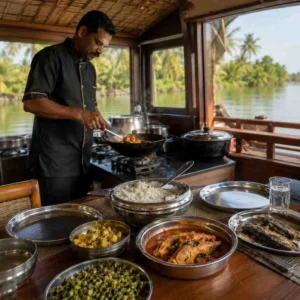
Food in Kerala is a communal, sensory experience. If you’re invited to a Sadhya (a traditional feast), forget the fork. You’ll be eating with your right hand from a fresh banana leaf. It’s not just about tradition; locals believe it makes the food taste better.
Pro tip: always wash your hands before and after and only use your right hand to touch the food. When you’re finished, fold the leaf toward you to show you’re satisfied. It’s a small gesture that says a lot about your local knowledge.
Keralites are incredibly literate and generally very friendly. However, public displays of affection (PDA) are still quite taboo here. Holding hands might be okay in tourist hubs, but anything more is frowned upon.
Also, keep an eye on your “foot etiquette.” Touching someone with your feet or pointing your feet at a person or a religious idol is considered very rude. If you accidentally bump into someone with your foot, a quick “sorry” or a hand gesture toward your chest is the local way to apologize.
Navigating the Pace of Backwater Life
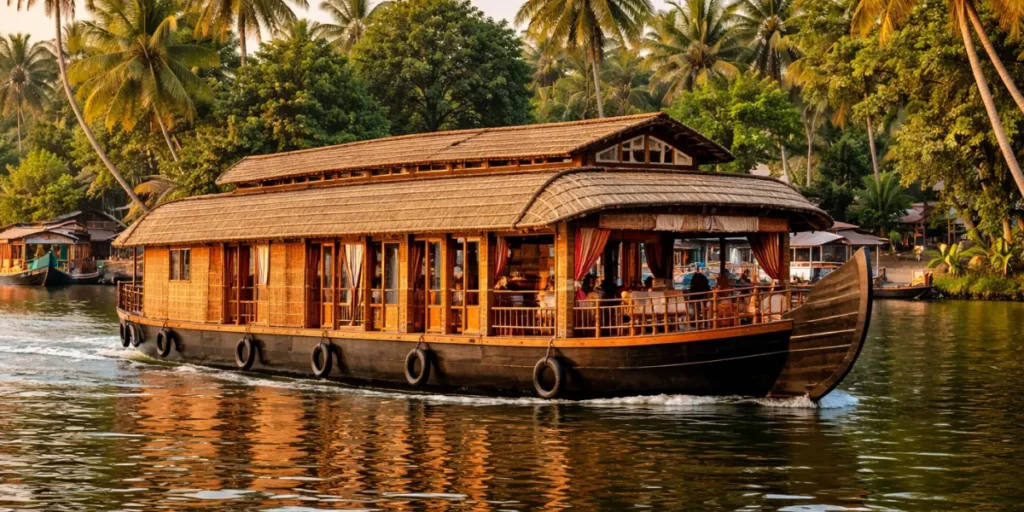
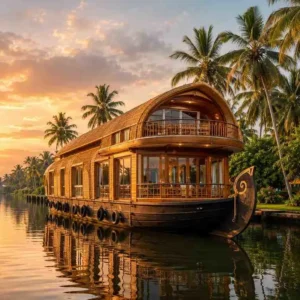
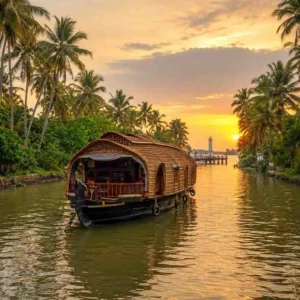
Life on the water moves slowly. If you book a cruise with Kerala Boat House, don’t expect a high-speed chase. The beauty is in the drift. You’ll see people bathing, washing clothes, and fishing along the banks.
It’s tempting to take photos of everything, but always ask before snapping a portrait of a local going about their day. A simple nod and a smile go a long way. Most people are happy to pose if you treat them like a neighbor rather than an exhibit.
Understanding Language and Local Pride
While English is widely understood, Malayalam is the soul of the state. Learning two words ‘Namaskaram’ (Hello/Respectful greeting) and ‘Nanni’ (Thank you) will change how people treat you.
There is a huge sense of pride in Kerala’s social progress and literacy rates. Engaging in a conversation about local history or the spice trade is a great way to bond. Avoid making comparisons to other parts of India; Kerala likes to be seen as its own unique world. Because, frankly, it is.
Final Thoughts
Kerala isn’t a place you just visit; it’s a place you feel. By following these cultural pointers, you’ll find that the “God’s Own Country” tag isn’t just marketing—it’s the truth. The backwaters are waiting, and now you know how to navigate them like a pro.
FAQ
Generally, yes. Kerala is one of the safest states in India. However, most small towns “shut down” by 9:00 PM. If you’re out late, stay in well-lit areas or stick to the tourist zones.
No. Stick to bottled or filtered water provided by your hotel or boat. Even for brushing your teeth, filtered water is the safer bet to avoid a ruined stomach.
People might look at you. Most of the time, it’s just curiosity rather than hostility. A friendly “hello” usually breaks the ice and turns a stare into a smile.
In small local eateries, it’s not mandatory but appreciated. In hotels and houseboats, a 10% tip or a small “service charge” for the crew is standard practice if you’re happy with the service.


Kerala Travel Tips for Respectful Social Interaction